Best Time to Visit Thailand - Weather, Costs, Crowds and Experiences by Month
Research and travel experts
Thailand’s weather and travel conditions vary dramatically through the year. In general, November–March is the dry “high season” (cooler nights and minimal rain), while May–October is the wet monsoon (“low”) season.
For example, Bangkok’s climate graph shows dry, mild winters and very hot pre-monsoon months. The chart below (Bangkok data) highlights that April is the hottest month (about 31 °C/88 °F) and September the wettest (~300 mm of rain). December is coolest (~26 °C/79 °F) and nearly rain-free. Understanding these trends helps pick the best travel window.
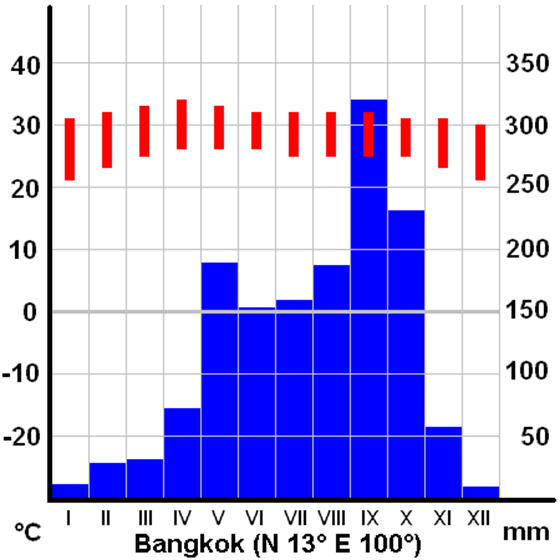
Bangkok’s monthly climate chart (red = temperature, blue = rainfall) shows year-round warmth with a pronounced rainy season in summer. In Thailand’s cool, dry season (Nov–Feb) you’ll enjoy sunny skies and comfortable days.
April heats up dramatically, often topping 35 °C in many regions. The monsoon (green) season (Jul–Sep) brings heavy tropical rains and lush scenery. Even so, showers often fall in bursts and are followed by sunshine. Late October sees the rains taper off, leading into the beautiful winter dry season.
Costs and crowds also fluctuate by season. Peak season (Nov–Feb) draws the largest crowds, especially around Christmas/New Year and major festivals. Hotels and tours often cost 30–50% more than in low season. Conversely, the green season (Jul–Sep) is Thailand’s low season: prices on flights, accommodation and tours can be sharply discounted, though some remote hotels may close and certain ferries run less often. Major cities like Bangkok see smaller price swings, but on islands high season rates can be ~50–75% above off-season. In short, for budget travel, the summer months offer the best deals (at the cost of occasional rain), while for best weather and beaches, November through March is idea.
To plan the perfect trip by month and travel style, consider using our Where Should I Travel Next? travel planner, which lets you filter destinations by month and interests (beach, adventure, culture, etc.). This can help match Thailand’s seasons to your desired experience.
January
January is in the heart of dry season. The weather is hot during the day (around 30–32 °C in Bangkok) but nights are relatively cool (low 20s °C). Skies are blue and rainfall is minimal. Crowds are high – this is peak season, with many tourists and higher prices (especially around New Year). It’s a great time for outdoor activities: beaches, islands, and hikes all enjoy excellent weather. You can also catch cultural festivities like New Year’s celebrations and the Bo Sang Umbrella Festival near Chiang Mai. Overall January offers warm sun and lively atmosphere, but expect busy destinations and premium rates.
February
February remains warm and dry, with daytime highs around 32–33 °C and almost no rain. Crowds stay high (it’s still peak tourist season), but evenings begin to warm up. Accommodation rates remain elevated. February brings Chinese New Year celebrations (varies by lunar calendar) in Bangkok and other cities, adding cultural vibrancy. With little rainfall, it’s excellent for island visits or Bangkok sightseeing.
If you prefer slightly fewer crowds, late February can be a sweet spot: weather is excellent but some high-season tourists have departed, yielding modest price drops compared to December–January peak.

March
March is still part of dry season but temperatures climb. Average highs reach around 34–35 °C (Bangkok’s mean high is ~95 °F). Humidity starts to rise as the hot season approaches. Rain remains scarce, though infrequent afternoon showers may occur near month’s end. Tourist numbers are high in early March, then gradually taper by late March.
Crowds and prices remain elevated overall, but the sun and warm seas make it ideal for beach trips. March also hosts Makha Bucha (Buddhist holiday), often celebrated in March (date varies), with ceremonies at temples and sometimes lantern releases. Toward the end of March, expect Phuket and other Andaman beach towns to prepare for the coming high season.
April
April is the hottest month of the year in most of Thailand. Temperatures often exceed 35 °C (95 °F) in the afternoons, so shade, hydration and sunscreen are essential. Relative humidity can feel very oppressive. This month is also Songkran (Thai New Year, mid-April), a nationwide water festival: towns and streets turn into massive water fights.
It’s a fun, once-in-a-lifetime cultural experience, but it draws huge local crowds and dries out some popular spots. Songkran falls right in the hottest week, which makes the festivities a perfect (and refreshing) excuse to cool off. Despite the heat, April is still technically shoulder-peak season, so prices remain high, especially around Songkran dates. If you love celebrating Songkran, go in April; otherwise, consider early May when crowds drop.
May
May marks the start of the rainy season (particularly in the Andaman west coast and Bangkok areas). The rain gradually increases, but early May can still be largely sunny. Average highs are around 34–35 °C, and first afternoon thunderstorms begin to appear. Crowds thin out significantly after April, so you’ll find smaller tour groups and lower rates. Accommodations become much cheaper than high season, often 20–30% off peak rates.
Bangkok sees a few heavy showers, but these rarely last all day. Beach destinations on the Gulf coast (Koh Samui, Koh Pha Ngan) may still be relatively dry this month. May is a good compromise: enjoy good beach weather early in the month, cheaper prices, and fewer tourists.
June
June is firmly in the monsoon season for most of Thailand. Southern Andaman beaches (Phuket, Krabi) see heavy rain and rough seas. The Gulf of Thailand (east coast) remains fairly dry until later summer. Bangkok averages about 34 °C high and 79% humidity; showers become frequent but often brief.
Crowds and prices are low – this is true “shoulder season.” Travel at this time offers lush green landscapes and deals on tours. Note that some smaller islands (especially west coast) may have sporadic ferry service. It’s wise to be flexible with plans. Overall, June offers warm, rainy conditions and “green season” bonuses like fewer people and much better prices.
July – August
These months are in the wettest, low season. Bangkok and northern Thailand see frequent downpours; Phuket and the Andaman have their main monsoon. Rainfall peaks in August (~300 mm in Bangkok).
Temperatures are slightly lower (early-30s °C) but humidity is high. Most outdoor activities must be weather-planned. However, because this is low season, prices drop dramatically: hotel deals of 40–50% off peak rates are common, and flights are cheaper.
Tourist crowds are at their thinnest (except a surge of Southeast Asian domestic travelers in July). Some remote areas shut down, but major resorts remain open. If you don’t mind rain and seek bargains, July–August is a smart choice – just pack for wet weather.
September
September is typically the wettest month (especially on the Gulf coast), with Bangkok averaging ~320 mm of rain. Waterfalls and jungles are at peak flow, but heavy storms can disrupt island hopping and long-distance travel. Crowds remain minimal and prices are lowest of the year.
The weather can be unpredictable, but there are still many dry spells to enjoy city sightseeing or spa retreats at budget rates. Festivals: The Vegetarian Festival is held in Phuket (often late Sept/early Oct), featuring abstinence rituals and street parades – an interesting cultural experience if visiting that region. In Bangkok and Chiang Mai, it’s generally quiet with normal local rhythms. In short, September is for travelers who value low costs and don’t mind some rain.
October
October sees the transition out of monsoon. Early month can still be rainy, but showers diminish by mid-month. Daytime highs drop a bit (around 32–33 °C) and nights are pleasantly cool by November. Tourist numbers start to pick up again (especially after mid-October), and hotel rates begin to climb as resorts reopen fully.
Vegetarian Festival celebrations continue into early October in some areas. It’s a great time to book trips for November–December: you often find better rates than in peak season but enjoy improving weather. By late October, sea conditions calm on the Andaman coast, making it possible to return to beach activities.
November
Dry season returns in November across most of Thailand. Rainfall is low, temperatures are warm (around 32 °C highs) with cooler evenings. Phuket and Krabi boast clear skies and calm seas – ideal for diving and snorkeling. Crowds start growing, and hotel rates rise toward peak-season levels. November features Loy Krathong and Yi Peng lantern festivals: nightly lantern releases in Chiang Mai and floating candle baskets nationwide.
This cultural highlight draws many visitors (especially around mid-November). Overall, November offers beautiful weather, blooming landscapes after the rains, and rich cultural events, making it one of the best months to visit.
December
December is firmly in high season. The weather is very comfortable: Bangkok’s average high is about 30 °C and there’s virtually no rain. Beaches are idyllic, and water activities are fantastic. Expect very large crowds, especially around Christmas and New Year. Resorts and flights book up early and command high prices. On the plus side, Thailand is less humid, skies are clear, and it’s festival time – you can enjoy holiday events and a festive atmosphere.
Chiang Mai’s flower and lantern displays continue in early December, and downtown areas light up for New Year celebrations. If you travel in December, book well in advance. But you’ll be rewarded with ideal tropical weather and lively festivities.
Traveler Tips: Always check regional climate – Thailand’s Andaman (west) and Gulf (east) coasts have opposite monsoons. For example, Koh Samui (Gulf) is wettest around October–November, not September. Also, consider events like Songkran (April water festival) and Loy Krathong (Nov) when planning. For customized destination suggestions by interest and timing,
try our “Where Should I Travel Next?” travel planner. It lets you pick a month and experience types (beach, adventure, cultural, etc.) to discover ideal destinations and plan your Thailand trip with confidence.
Frequently Asked Questions
The best time to visit Thailand is generally between November and February, when the weather is cooler, drier, and more comfortable across most of the country. This period offers ideal conditions for beaches in Phuket and Krabi, city exploration in Bangkok, and cultural trips to Chiang Mai. However, it is also peak tourist season, meaning higher prices and larger crowds.
Yes, Thailand can still be a great destination during the rainy season (May to October). Rain typically comes in short, heavy bursts rather than all-day storms. Travel costs are lower, hotels offer discounts, and popular attractions are less crowded. Islands in the Gulf of Thailand, such as Koh Samui, often have better weather than the Andaman Coast during this period.
The cheapest time to visit Thailand is usually between May and October, during the low season. Flights, hotels, and tours are significantly more affordable compared to peak months. September and October often have the lowest prices, though they may also have higher rainfall depending on the region.
Thailand is most crowded between December and January, especially around Christmas, New Year, and Chinese New Year. Popular destinations like Phuket, Bangkok, and Chiang Mai experience peak hotel occupancy and higher tour prices. If you prefer fewer crowds, consider visiting in November or late February.
November–February: Best for beaches, island hopping, sightseeing, and outdoor activities. April: Ideal for experiencing Songkran (Thai New Year water festival). July–October: Good for cultural travel, temple visits, and budget-friendly trips. March–May: Best for fewer tourists, though temperatures can be very hot.
About the Author
Paradise Luxury Travel is a global travel content team dedicated to crafting best travel insights, experience-driven destination guides. The Paradise Travel Team does the best work in looking for best destinations and travel companies to give you the best travel experience. This article is reguraly updated to reflect current hotel and tour information.
Disclosure: Some of the links on this site are affiliate links. This means we may earn a commission at no extra cost to you if you make a purchase through them. As an Amazon Associate, we earn from qualifying purchases.

Community Discussion
Ask questions, share feedback, or discuss this guide with other travelers.