Thailand Visa & Entry Requirements Explained (Tourists, Long-Stay & Digital Nomads)
Research and travel experts
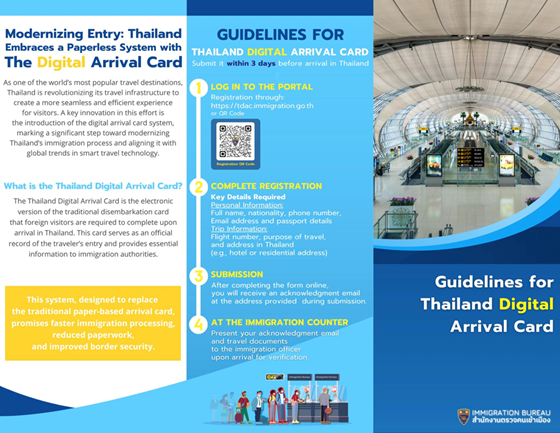
Thailand’s entry rules vary by nationality, length of stay, and purpose. In mid-2024 Thailand expanded its visa offerings dramatically. The country now offers visa-free entry up to 60 days for citizens of 93 countries (up from 30 days previously). This means many tourists just need a passport (and the new Thailand Digital Arrival Card, completed online pre-arrival) and can stay visa-free. However, note that in late 2025 the visa-free stay will revert to 30 days, so always check current rules.
Tourist Visa & Visa Exemption
Visa Exemption (Tourist Visa):
If your country is on Thailand’s list, you get 60 days on arrival (enter via air/sea) as of 2024. You may extend this once by 30 days at an Immigration Office (for about 1,900 THB), allowing up to 90 days total. As of 2025’s planned changes, the initial visa-free will likely be 30 days (with the same extension option). Always confirm before you travel.
Tourist Visa (Embassy):
To stay longer, apply ahead for a Tourist Visa from a Thai embassy/consulate. A Single-Entry Tourist Visa gives 60 days in Thailand, extendable 30 days (for 90 total). A Multiple-Entry Tourist Visa can allow multiple stays of 60 days each (also extendable). These visas require proof of round-trip flight and sufficient funds. With the new E-Visa system, you can apply online for many nationalities. Tourist visas are still available to all nationalities and remain the go-to for stays over 30 days.
Visa on Arrival:
Citizens of a few countries not in the visa-exempt list can get a 15-day Visa on Arrival if eligible (e.g. Chinese passport holders) — but this is limited and currently suspended for COVID rules relaxation, so check current status.
Extension:
Extensions are handled at Immigration Offices. Both visa-exempt visitors and those on a Tourist Visa can apply for a 30-day extension (fees around 1,900 THB). For example, even after Thailand reduces visa-free stays to 30 days, tourists will still be able to extend to 60 days total via this extension.
Long-Stay & Special Visas
- Digital Nomad Visa (Destination Thailand Visa, DTV): From July 2024 Thailand launched the 5-year Destination Thailand Visa for freelancers, remote workers, and “workcationers.” The DTV allows 180 days per entry, multiple entries, and is valid for 5 years. Applicants must be 20+ years old and earn a foreign income (proof of at least 80,000 USD/year, along with a Thai bank deposit). This visa is specifically for remote workers and some “Thai Soft Power” activities (like long courses, sports training, festivals). Note that DTV holders cannot work for Thai companies or do paid work for Thai clients. Dependents (spouse, children) can join the primary holder on this visa.

- Thailand Elite Visa: A long-standing option, the Elite Visa (by Thai government) offers 5-20 year privileges but at a high fee (100k+ USD). It’s essentially a paid residency visa with perks (expedited immigration, airport services).
- Smart Visa & LTR: Thailand also offers a Smart Visa (for specialized professionals/investors) and since late 2023, a Long-Term Resident (LTR) visa for high-income individuals, retirees, investors, and geniuses. The LTR is a 5-year visa (renewable) aimed at wealthy foreigners. Requirements include income, property investment, or careers in targeted industries. Details are complex, but LTR can grant tax exemptions and other benefits. For most tourists and nomads, the DTV is more relevant for digital nomadism.
- Transit Visa: If transiting through Thailand on certain routes, a visa may be needed (or transit visa exemption if under 12 hours). Check your flight itinerary and nationality for exemptions or Transit Visa requirements.
Entry Requirements & Practicalities
- Digital Arrival Card (Thailand Pass): Although COVID-era restrictions have largely lifted, travelers still need to submit an online arrival card or download the “ThailandPlus” app for entry information and vaccination status (though vaccine proof is not required for entry as of 2024). It’s wise to have an arrival declaration done online beforehand.
- Passport Validity: Your passport must be valid for at least 6 months upon entry. Make sure you have empty pages for entry/exit stamps.
- Proof of Funds: Immigration officers may ask tourist entrants to show proof of funds (~10,000 THB/person, 20,000 for family) and a return flight. Carry copies of bank statements and tickets to be safe.
- Visa Run / Border Run: Previously, travelers did frequent “visa runs” (leaving Thailand by land or sea to get a new visa stamp) to extend stays. Since the 2024 visa reforms, this is less necessary and often discouraged; instead get a longer visa before arriving if you plan to stay months. Overstaying a visa in Thailand is penalized with fines (starting ~500 THB per day) and possible blacklisting. Always respect your permitted stay.
- Registration (TM.30): If on a long-term visa (non-immigrant, work, etc.), Thailand requires your host (hotel or landlord) to report your address every 90 days (TM.30 form). For short visits (tourist visas), this doesn’t apply.
- Health Insurance: Foreigners (except tourists) must have health insurance for visa types like long-stay or retirement. DTV and Tourist Visas don’t require insurance, but it’s highly recommended.
Summary of Stay
| Entry Category | Maximum Initial Stay | Extension Available | Notes |
|---|---|---|---|
| Visa Exemption (Tourism) | Up to 60 days (proposed reduction to 30 days) | One-time 30-day extension at Thai Immigration | Available to passport holders of 93 countries (as of 2024) |
| Visa on Arrival (VOA) | 15 days | Not extendable | Limited to specific eligible nationalities |
| Single-Entry Tourist Visa (TR) | 60 days | One-time 30-day extension at Thai Immigration | Must be obtained in advance from a Royal Thai Embassy or Consulate |
| Multiple-Entry Tourist Visa (METV) | 60 days per entry | 30-day extension per entry | Valid for multiple entries within a 6-month period |
| Destination Thailand Visa (DTV) | 180 days per entry | One 180-day extension per entry | 5-year multiple-entry visa designed for digital nomads and remote workers |
| Long-Term Resident (LTR) Visa | 5 years (renewable) | Not applicable | Designed for high-net-worth individuals, investors, and specialized professionals |
With proper planning, entry into Thailand is straightforward. Whether you’re a short-term tourist or a remote worker, use the visa that fits your stay length. For flights, check Kiwi.com for deals, and book directly with reputable airlines. For ground transport, book transfers via Kiwi.Taxi or local apps (Grab, Bolt) in advance for peace of mind after a long flight.
Frequently Asked Questions
Yes, most nationalities get 60 days visa-free by air (30 by land). Show return ticket, proof of funds ($20K THB), and hotel booking at immigration—no extensions beyond 30 extra days.
Non-Immigrant O-A/O-X visas for 50+ retirees: 1-year renewable O-A or 5–10-year O-X. Requirements include $23K USD bank deposit, health insurance, and annual reporting.
Destination Thailand Visa (DTV): 180 days (extendable) for remote workers, freelancers, or digital nomads. Needs $13K USD income proof, portfolio, and online application—perfect for Chiang Mai hubs.
Apply at immigration offices 15–45 days before expiry for 30-day extension ($60 fee). Bring passport, TM.6 form, photos, and accommodation proof—online extensions coming soon via Thai e-Visa.
For 15-day VoA (e.g., some African/Asian nationalities): passport valid 6+ months, return ticket, $55 fee, address proof. Check exemptions; e-Visa portal simplifies for many.
About the Author
Paradise Luxury Travel is a global travel content team dedicated to crafting best travel insights, experience-driven destination guides. The Paradise Travel Team does the best work in looking for best destinations and travel companies to give you the best travel experience. This article is reguraly updated to reflect current hotel and tour information.
Disclosure: Some of the links on this site are affiliate links. This means we may earn a commission at no extra cost to you if you make a purchase through them. As an Amazon Associate, we earn from qualifying purchases.

Community Discussion
Ask questions, share feedback, or discuss this guide with other travelers.